
Polyethylene glycol (PEG) has become the core strategy of prolonging the half-life and improving the stability of drugs by covalently linking PEG molecules to the surface of drugs or carriers.
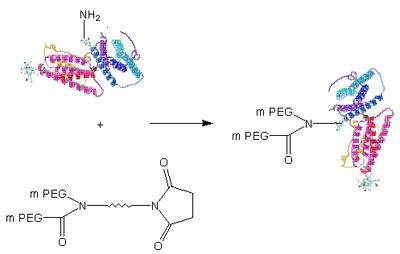
core role
prolonged circulation time and reduced clearance. While reducing glomerular filtration rate, PEG molecules form a hydration layer through steric hindrance, reducing the contact between drug and protease and increasing the molecular volume.
Reduce immunogenicity and improve safety
PEG molecules cover the antigenic sites on the drug surface, reducing antibody recognition and immune response. For example, after PEG modification, the immunogenicity of nucleic acid drugs is significantly reduced, and the risk of allergic reactions is reduced. In addition, the hydrophilicity of PEG can improve drug solubility, which is particularly suitable for the development of hydrophobic polypeptide formulations.
Optimize pharmacokinetics to achieve remission
the large molecular weight of PEG (e. g., 40 kDa) slows the rate of drug release and reduces the frequency of dosing. For example, PEGylated liposomal doxorubicin (PLD) tumor tissue enrichment has an EPR effect while reducing cardiotoxicity, significantly improving the therapeutic window.
Improve physical and chemical stability
the hydrophilicity of PEG can balance the hydrophobicity of the polypeptide, reducing denaturation caused by temperature or pH changes. Its steric hindrance effect can also inhibit the aggregation between drug molecules and improve the stability of the formulation.
Potential defects
reduced biological activity, masking the site. PEG molecules may coat the active site of the drug, resulting in a decrease in biological activity. For example, PEGylated liposomes may interfere with target cell uptake, reducing delivery efficiency; some PEG conjugates are unstable under physiological conditions, affecting therapeutic efficacy.
Generation of immune responses and antibodies
although PEG modification can reduce immunogenicity, some patients can still produce anti-PEG antibodies (APAs), causing drug neutralization, allergic reactions, or accelerated clearance. The abundance of PEG in tissues can cause potential toxicities such as hypercalcemia and acidosis when the drug is administered for a long time.
Production complexity and quality control challenges
PEG modification involves multi-step chemical reactions and requires high process control, resulting in increased production costs. After modification, drug molecules have heterogeneity (such as uneven distribution of PEG chain length), which requires complex analytical methods to ensure quality consistency.
Post time: 2026-10-12